
Why, When and How to blanket your horse this Winter.
Many horse owners approach winter blankets with the same enthusiasm with which they approach their personal shoe collections: You can never have too many. But by assessing your horse’s individual needs, your stable yard, and the weather patterns in your area, you can make a decision that will help your horse live through the chilly months in comfort and good health.
Hair coat–A horse that grows a thick winter coat might not require any blanketing, cold weather causes your horse’s hairs to stand on end, which creates an insulating effect with warm air trapped near the skin. In fact, putting a blanket on a furry horse can reduce that insulating power by flattening the hairs. However, if your horse’s winter coat is skimpy or if your horse is clipped, then a blanket might be necessary to make up for what’s missing.
Weather–Horses with full winter coats can stay warm, without blankets, in temperatures well below zero. It’s also important to consider other weather factors, such as humidity, wind chill, and precipitation.When soaked, even a thick winter coat can lose its warming power, leaving your horse chilled to the skin. Similarly, stiff winds can lift the hair coat, allowing icy blasts to penetrate straight to the horse’s skin. So, a horse that might be comfortable naked on a dry 20-degree day might appreciate a lightweight, waterproof cover if it’s windy or wet, even at a more moderate temperature.
Living arrangements– The notions of “hot” and “cold” are relative. A horse stabled in Gauteng, accustomed to winter temperatures of around 16 °C will likely find 8 °C degrees chilly if he’s suddenly relocated to a colder climate. That horse might need a blanket even when his stablemates, accustomed to the local weather, might not.
Age and health–Foals and geriatric horses might have a tougher time keeping themselves warm than an animal in his prime.
What type of blanket should I use to keep my horse nice and toasty?
If your horse needs a blanket outdoors, your best bet is a turnout rug, Turnout blankets are designed to withstand the rigors of outdoor wear and equine roughhousing. Most are also waterproof. Stable blankets are designed for indoor use, so they’re usually less rugged, not waterproof and they are physically lighter in weight, which means less pressure on your horse, and thus a lower incidence of rubbing.
If your horse spends time indoors and out, and you have the budget for it, consider buying both a turnout and a stable blanket. If you can only afford one, then the more versatile turnout rug is probably the way to go.Both stable blankets and turnout rugs typically come in three weights–light, medium, and heavy. Unfortunately, what’s considered light, medium, or heavy is determined by each manufacturer, so two midweight blankets don’t necessarily deliver the same warmth. Typically, though, a lightweight blanket has no insulating filler, a midweight cover has 200-300 grams of filler, and a heavyweight rug has 300 or more grams of filler.
What materials should I look for in a good winter blanket, for both the outer shell and lining?
Most turnout blankets have an outer shell of nylon, polyester, or a combination of the two, which gives you the best of both worlds–strength and durability, lighter weight and less expense.
Stable blankets are often made with these same materials, but might also be made of cotton, cotton blends, or polar fleece.
Nylon is typically considered the high-end material, it is very strong and resilient and it doesn’t hold stains, but it’s very expensive . 100% polyester at the lower end of the scale, is lightweight, more affordable, and strong, but comparing strength per weight of material, it’s not as strong as nylon.
You’ll also see a selection of linings; polycotton, nylon, and fleece-like wicking material are the most common.
“The more breathable the liner, the more breathable the blanket
Nylon is probably the most common lining. It’s also breathable, and it’s slick, so hairs don’t get caught, and it keeps the coat shiny.
Polycotton is a less expensive lining (polyester and cotton).However, if polycotton gets wet or sweaty, it dries more slowly than nylon or wicking materials.
When selecting a blanket, also consider whether it’s waterproof (a must for turnout in wet weather) and breathable. Breathable blankets allow moisture near the horse’s skin to pass through to the surface. For instance, if your blanketed horse works up a sweat romping with his pals on a brisk winter day, a breathable blanket will help him stay at a comfortable temperature–and prevent chills–by allowing the sweat to escape into the air.
What design features should I look for in a blanket? Which are frills and which are really useful?
Today’s blankets boast a variety of special features and options designed to improve your horse’s freedom of movement and comfort while minimizing the blanket’s movement on your horse. Here are three areas where you’ll have choices to make.
Neck–A standard neck is tried and true but if the weight of the blanket shifts back on the horse move to a high neck cut, as this will take weight off the withers and shoulders.
Cut-back necklines are also available; some people like them for high-withered horses because they allow the horse to move more freely and help to prevent rubbing on top of more prominent withers.
Shoulder–Shoulder rubs and restricted shoulder movement are perhaps the most prevalent blanketing troubles. Shoulder gussets, now available on many blankets, can help with both issues by helping to alleviate pressure on the shoulders during movement.
Tail–In bad weather, horses turn their hind ends to the wind. A tail flap offers added protection for this exposure and helps keep the blanket sides down during wind gusts.
The below picture gives you an idea of the different “Neck” cuts available.

- Denier A measurement unit from 70 to 2,400 that’s similar to thread count in bed sheets: The higher the number, the more durable the fabric. Look for at least a 300 denier fabric for a turnout.
- Cordura This popular, water-resistant synthetic fabric often used in turnout blankets is also resistant to tears and abrasions.
- Hollofil, fiberfill, or simply “fill” These all refer to a type of water-resistant polyester fiber that insulates without bulk or weight. A higher number means a warmer blanket.
What Size blanket do I need for my Horse?
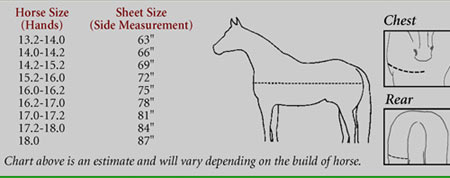
Below are a couple of charts to give you an idea of what size blanket you will need.
a) The chart below shows you how to measure your horse and gives a guideline to the different sizes on blanket labels, according to the country they are manufactured in. (http://www.ashbree.com.au/measuring-for-horse-rugs/)
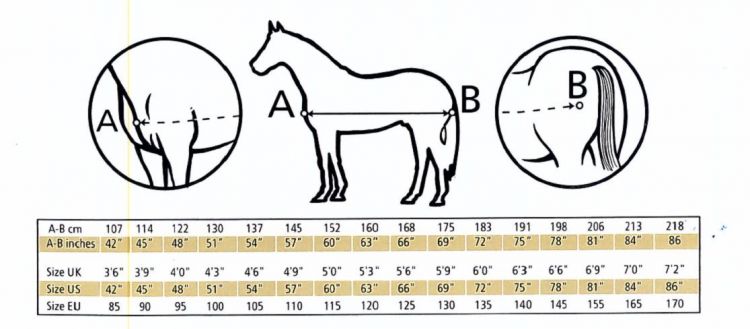
b) Height v measurement.
When to Blanket?
So you’ve decided to blanket your horse. But what should the thermometer read before you slap on that protective layer, and how low does the mercury need to dip before its time to upgrade to a warmer weight? When in doubt, you’re usually better going lighter than heavier, because overheating tends to be the greater danger for horses. You can also do this quick check:
Your horse is probably too cold if he’s shivering, seems unusually tense or stiff, has cold ears, or has hairs standing on end. Your horse is probably too warm in his blanket if he’s sweating (check the rib cage, not just the shoulder) or seems unusually restless.
| BLANKETING GUIDELINES | |||
| Type of Blanket | Average temperature | ||
| Normal Winter Coat | Clipped Horse | ||
| Light sheet | 10°C | 18°C | |
| Midweight blanket | 7°C | 10°C | |
| Heavy blanket | -6°C | 5°C | |


No comments yet.