Tag Archives: equilife sa

You’ve reached Medium! Let the games begin … ~ Brigitte Billings

There are some riders who believe that real dressage doesn’t begin until you reach Medium. Obviously this is up for debate, much like the showjumping adage that a horse isn’t jumping until he faces a metre obstacle. Anyone who’s ever cantered up to a 90cm jump will admit that it’s not for sissies. Likewise, you’ll have found yourself challenged both mentally and physically by many of the tests you’ve ridden till now.

The difference with dressage is that although this series of articles has provided a ‘fast-forward’ through the grades, in real terms, your journey to Medium may take you five years. During this time you will certainly have been doing dressage – particularly if you’ve been serious about helping your horse reach this point.

The tough stuff

The hard fact of dressage is that not every horse will make it to Medium or beyond. One of the greatest frustrations many riders face is the realisation that they’ve hit a brick wall along the way. It may be a freak accident, a conformational challenge or simply understanding that the pressure is too much for their horse to happily work with. Some of these ‘walls’ are temporary – waiting for an injury to heal, or working at a pace that accommodates your horse’s body or mind. In some instances, this is where the hidden costs of the sport come to play. At the highest levels, riders invest great sums into keeping their horses sound and healthy.

Unfortunately, you may also find yourself facing the certainty that you’ve hit your ceiling as a horse-rider partnership. Most will be happy to continue their riding relationship without pushing for more, but for a rider with a competitive streak, this can be a huge dilemma. If you’re fortunate, you’ll be in a position to buy a new horse and keep your old friend too. However, the costs of keeping horses can be prohibitive. If this is the case, bear in mind that South Africa is sorely lacking in schoolmasters and a well-schooled horse can be an absolute gem for another rider who plans to go through the lower grades. As long as horses are sold with full disclosure of reasons for sale, there is no shame in finding your horse an excellent new home.

 Fred and Ginger

By this stage, you and your horse probably know each other as well as old dance partners; you’ll literally be joined at the hip as your seat aids become the mainstay of your communication channels. One of the things you may notice about the Medium tests is that they’re longer than the previous grades – six and a half minutes may not seem like a lot, but when you consider the amount of physical strength required for the movements you’ll be riding, as well as the sheer number of moves in each test, it will become clear that strength and fitness are not negotiable at this stage. Your horse will not only be fit and supple, but will also have ‘pushing’ power to maintain strong steady gaits, and ‘carrying’ power to engage his hindquarters, lift his forehand and move with grace. You’ve reached the point where you have days that you believe you might actually make it to the Olympics … and then there’ll be days that you feel as ineffectual as you did in Prelim. Because this is riding and horses were designed to keep us humble!
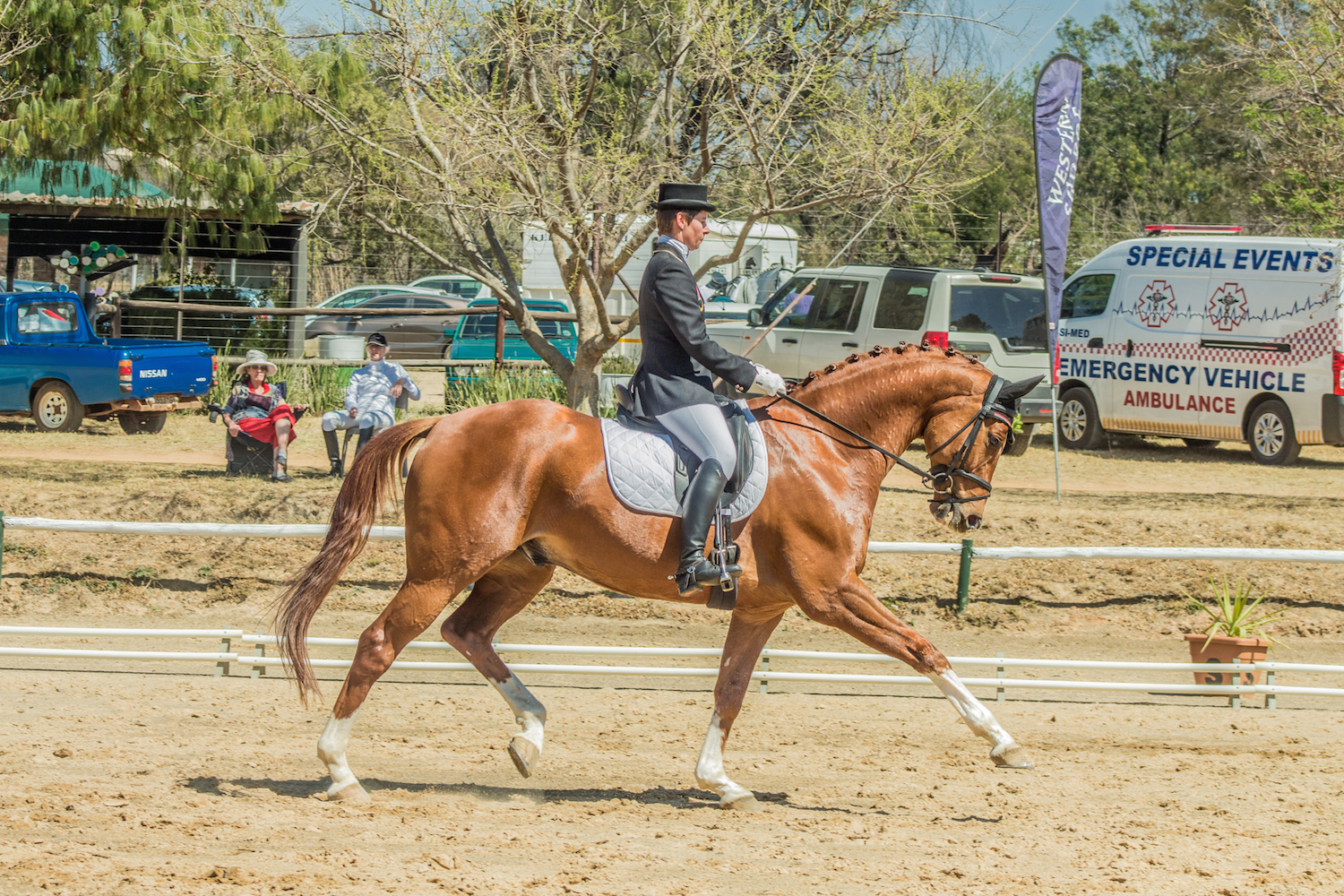
Chere Burger and Adelprag  Quick Silver

Chere Burger and Adelprag Quick Silver

 The tests

Once again, there are seven Medium tests – 1, 2, 3, 4, 5, 6 with a Freestyle. In addition to your double bridle and spurs, you may have graduated to riding in tails. In the past, top hats were another marker of reaching the higher levels, however with safety awareness on the rise, most opt to keep their hard hats.

While you’ll be riding many of the moves introduced in the previous levels, now judges will be looking for greater accuracy and more extreme angles in the lateral work. There will also be attention to regularity and activity – each gait should be equally expressive, regardless of degree of collection. A collected canter is not simply a slow canter – it should have the same power and activity as an extended canter, simply without covering as much ground. Judges will also expect to see a horse who is correctly positioned and uphill in his movement. Even when riding a downward transition, there should be a sense that the horse gearing down, rather than slamming on brakes or flopping out of the gait. This will definitely become clear to you when you start to ride tests that either begin or end with a collected canter to a halt at X. In fact, canter work becomes pivotal in Medium, with many tests focusing largely on this gait, incorporating 10m circles, half-pass and flying changes. If you’re reading this as a Novice rider, it may be startling to think that there’ll be a time when you can expect your horse to do an entire lesson in canter – but such is the beauty of dressage that with correct training, he will be quite ready for it.

 Next month we’ll look at the Advanced classes.

Want to try it out? Recreational membership is free! Visit www.dressagesa.com for contact information. 


A Wander Down Turffontein’s Memory Lane ~ Ashleigh Hughes (Love Racing)

In July 2016, Turffontein Racecourse was awarded a prestigious Blue Plaque, by the Johannesburg Heritage Foundation. Their vision is to preserve and protect our rich and varied heritage of Johannesburg and its associated social history, for the use and enjoyment of both current and future generations.” Of course my curiosity was piqued and a bit of research into the history of the racecourse, and surrounding areas, started me on an incredible journey back in time, into the history of horse racing in Johannesburg, and how it was thoroughly intertwined with the very beginnings of our beloved “City Of Gold”.


Old Grandstand 17 December 1931  - picture which was printed in 1979

Old Grandstand 17 December 1931 – picture which was printed in 1979

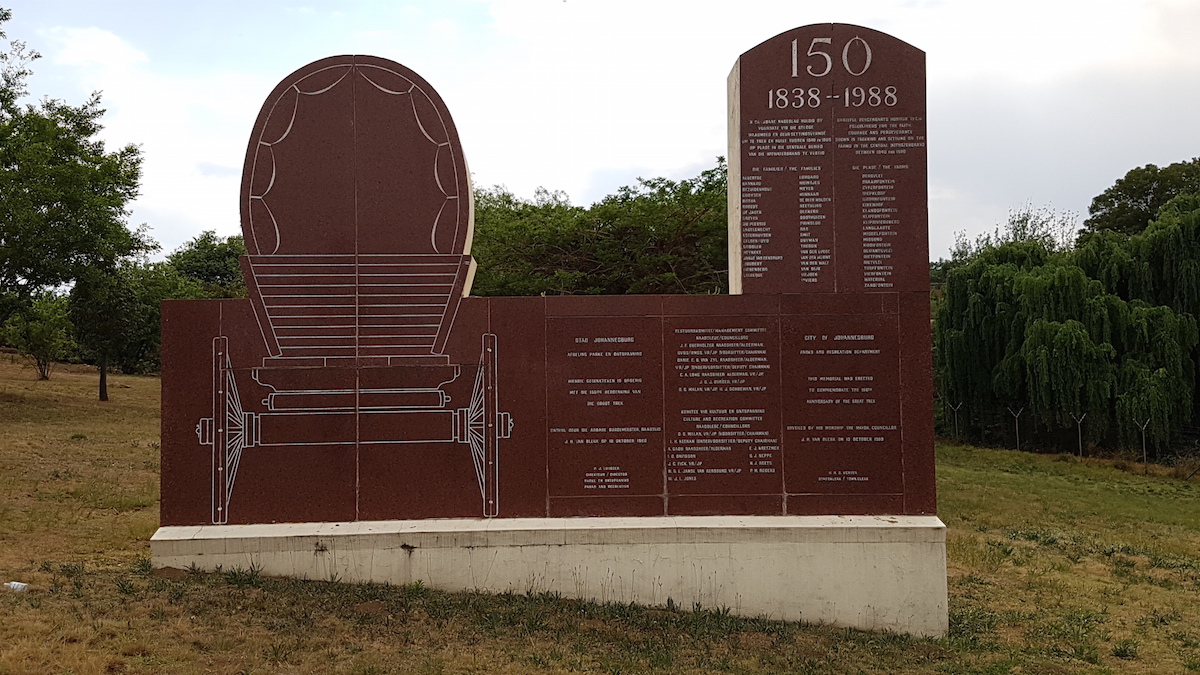
The name of the racecourse is often mistakenly thought to be associated with the grass surface that the horses race on, but the name goes back way further than the beginnings of horseracing. All the way back, in fact, to the original settlers from the Great Trek in 1838. When translated directly from old Afrikaans, Turffontein means “clay fountain”. It is listed as one of the original 20 settlers farms on the Witwatersrand, on the monument erected in 1988, to honour those first families who settled in the area. Abraham Smit owned the original farm called Turffontein, and in 1886, Paul Andries Ras, a descendant of another one of original settler families, bought the farm, when a rich gold reef was discovered in the area. The “gold rush” began in earnest by then, and much of the farm was pegged off by prospectors for mining. This new influx of people started to settle in shacks in what is now the Joburg CBD, and fortunes were made literally overnight, as the rich gold resources were extracted all over the area. With this burgeoning new wealth, gambling was a very popular past time, and with horse racing being already popular in many other mining towns, it was a natural progression for it to start in the new settlement too. The original racecourse had its finishing line roughly where the intersection of Eloff and Commisioner Streets is today, and the first Johannesburg Handicap over 2 miles was run on 17 June1887 – the winner had the rather ironic name of “Second”!

The popularity of racing in the new mining town grew significantly in just a few months, and in 1888, under the guidance of the very first president of the Johannesburg Turf Club, Captain Carl von Brandis, a new site was found just a few miles away, on the farm called Turffontein. Directly opposite the main entrance to the racecourse in Turf Club Street, is a road called Von Brandis, named in honour of the Captain who was so instrumental in the setup of this new racecourse. The Town Deep mine (later called the Village Deep) was also leasing a significant portion of the now Ras owned farm, and to this day the mining tunnels run deep underground, almost 1.5km under the racecourse. December 1888 saw the very first running of the Summer Handicap, which in its current form as the Gr1 Sansui Summer Cup over 2000m, is Turffontein’s premier racing event.

Oil painting of Captain Carl von Brandis, first president of the Johannesburg Turf Club in 1887 (Africana Museum, Johannesburg)

Oil painting of Captain Carl von Brandis, first president of the Johannesburg Turf Club in 1887 (Africana Museum, Johannesburg)

The enormous stakes offered at these early racemeetings attracted horses from all over the country, and Turffontein very soon became the hub of horseracing not only in Johannesburg, but in the entire country. But in 1899, the darkest period of Turffontein’s history began. The Anglo-Boer War broke out, which caused the indefinite postponement of many races, and the British designated the racecourse as a suitable site for what would become the biggest concentration camp on the Witwatersrand. Over 5000 Boer women and children were interred on the site, and even though there was an adequate water supply at the nearby Wemmer Pan, the conditions in the camp were atrocious. The British listed over 700 deaths in the camp, which was run from 1899 to 1902, and the bodies were buried on the nearby Kliprivier Berg farm, just 5 miles away. That site, known today as the Suideroord Concentration Camp Memorial, has a vast area dedicated to remember the people who died at the Turffontein concentration camp. The 150 year Great Trek Commemoration Memorial is also on this site.

Great Trek 150 Year Commemoration Monument at the Suideroord Concentration Camp Memorial site

Great Trek 150 Year Commemoration Monument at the Suideroord Concentration Camp Memorial site

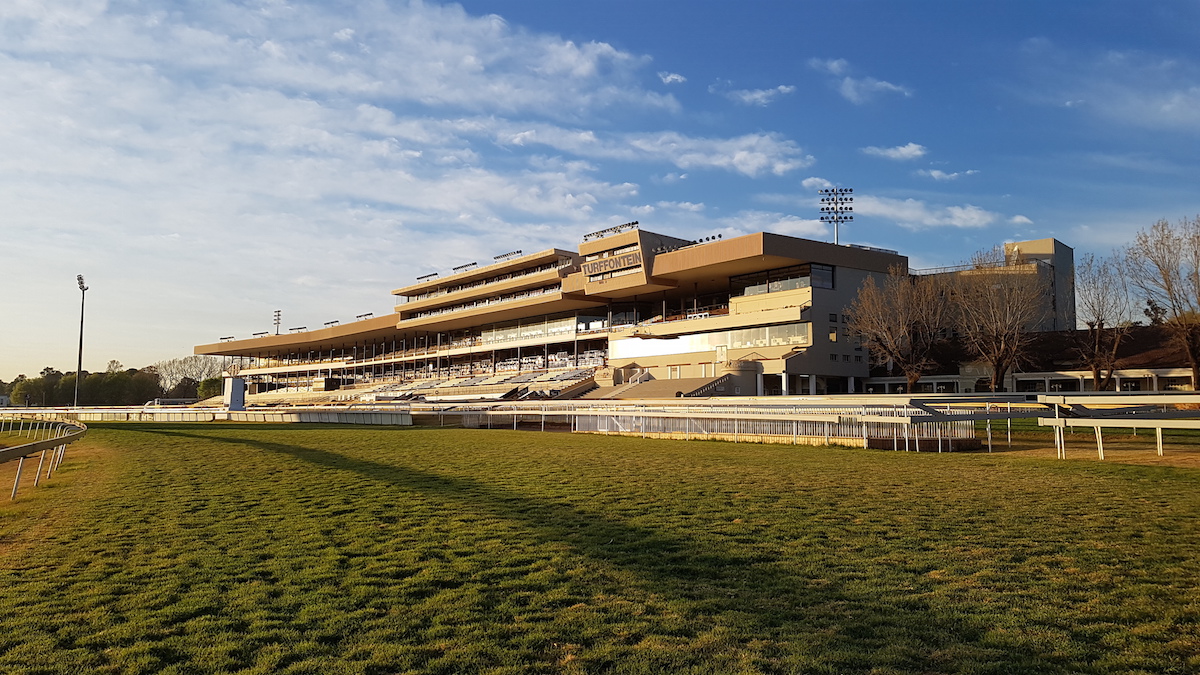
When the war ended in 1902, it was back to business, as usual, for the Johannesburg Turf Club, but this time they had competition from a number of other turf clubs, which had sprung up in Auckland Park, Germiston (Gosforth Park), as well as in Benoni and Pretoria. Over the next two decades, Turffontein grew from strength to strength, and when the Prince Of Wales (Later King Edward VIII) did a countrywide tour in 1925, a decision was made to move a racemeeting from Auckland Park to Turffontein, as the new facilities were more suitable for a Royal Visit. The new grandstand was a very impressive 3 story structure. There was a vast staired viewing area from the ground level, leading up to a very elaborately decorated first floor viewing area. The two rounded balconies were beautifully preserved when the new grandstand was built in 1974, and they are still easily recognisable as the main feature of the entire grandstand.

1-grandstand-lead-pic

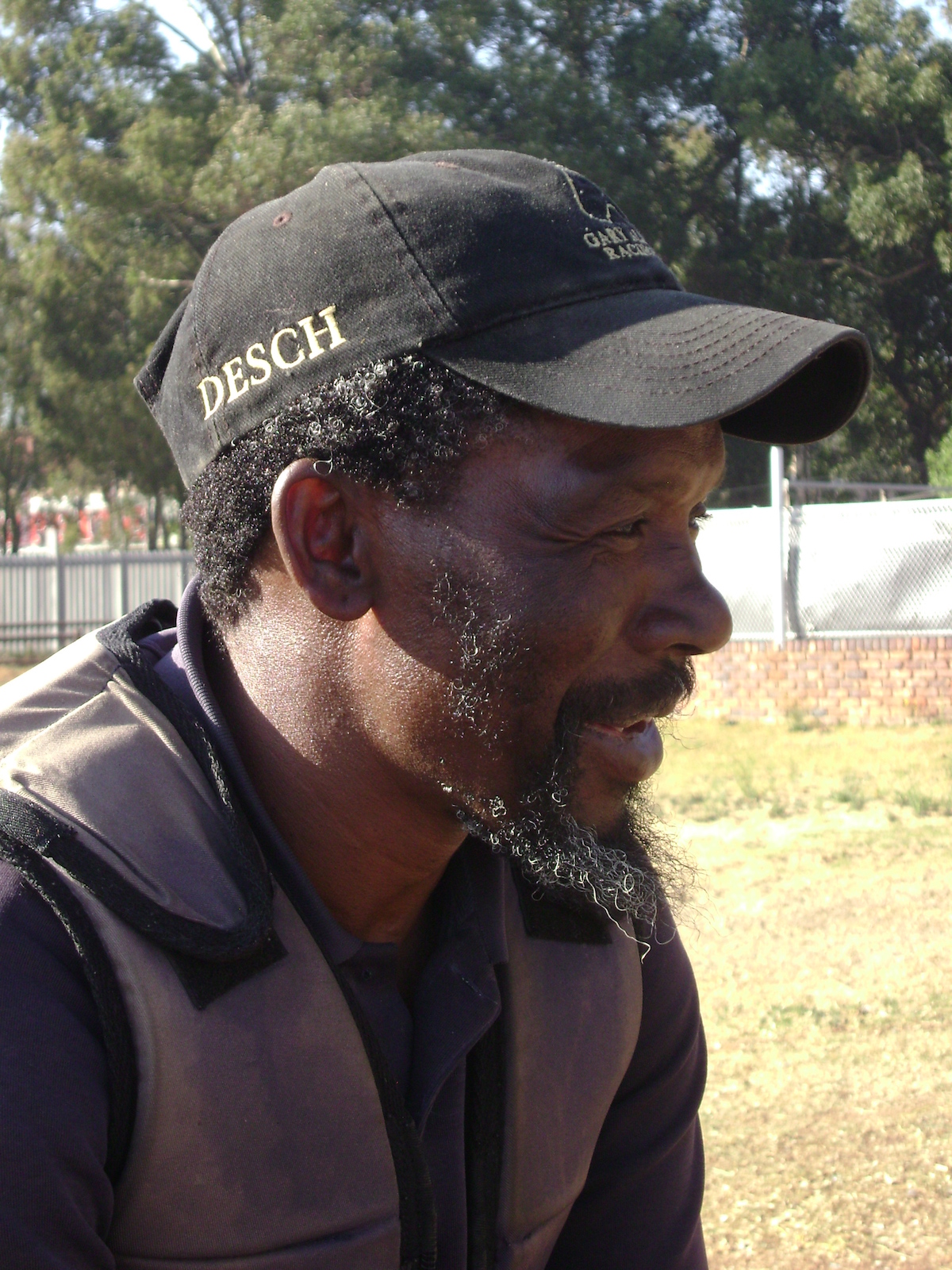
There is also a training facility at Turffontein, split into 2 sections. The newer wooden stables were built to accommodate the trainers moved from Newmarket and Gosforth Park, when those courses were closed down and sold. The brick barns and yards are much older though, and construction on these buildings was completed in 1979. But the training tracks in the centre of the racecourse have been around nearly as long as they have been racing there. Up until the barns were completed, trainers had their yards in the neighbouring suburbs. Their horses walked down the tar roads, to the training tracks, and gained access through a gate, opposite the intersection Of Turf Club and High Streets. Gary Alexander and Ormond Ferraris are the only two current trainers still at the training centre, who have been there since the brick stable yards were originally built. Gary’s induna Boyi Mbele, and Mr Ferraris’s induna John Sebeko have both been with their employers since they first moved into the training centre. Both Boyi and John are very close to retirement, but you’d be hard pressed to find two more competent horsemen – I’ve asked for their sage advice on many occasions!

Gary Alexander’s Induna Boyi Mbele

Gary Alexander’s Induna Boyi Mbele

Gary’s father Duncan Alexander got his trainer’s licence in the late 1970’s, after an illustrious career as a jockey. His stable yard was just 800m from the racecourse, next to the Turffontein Post Office in Stanton Road. The stables are still standing, with the corrugated iron reinforced walls still in place, although they are now used as a storage space and low cost housing. There are various other stable yards throughout the residential suburbs, which have all been repurposed, but are still the original structures – the building techniques of yesteryear have really stood up to the test of time. In 1980, the Alexander yard moved to the newly built stables, and Gary took out his own licence in 1982. He recalls horses having to walk to Gosforth Park to race. If they raced at the Vaal, they had to walk the horses down to the Springfield train station, to catch the train to Vereeniging to race! There was a gate on the north east side of the course, near the 1400m mark, allowing horses to walk down to the nearby Wemmer Pan, to take a swim or cool their legs. The stories of days of yore, are absolutely fascinating, and it is quite remarkable how things have changed in recent times.

Another fascinating site within the racecourse itself, is a small graveyard next to the irrigation dam, in the centre of the tracks. Four of the very best horses to ever race at Turffontein are buried there: Caradoc, Furious, Beau Art and Aquanaut. Each gravestone has a brass plate with their racing achievements displayed – a lovely tribute to these special racehorses. All four horses have restaurants named after them in the Turffontein grandstand, and both Caradoc and Beau Art were also Lead Horses for racedays, leading out the youngsters onto the track for each race.

Another fascinating site within the racecourse itself, is a small graveyard next to the irrigation dam, in the centre of the tracks. Four of the very best horses to ever race at Turffontein are buried there: Caradoc, Furious, Beau Art and Aquanaut. Each gravestone has a brass plate with their racing achievements displayed – a lovely tribute to these special racehorses

Four of the very best horses to ever race at Turffontein are buried there: Caradoc, Furious, Beau Art and Aquanaut.

The original Standside racecourse, is regarded by many as the best turf surface and fairest course in the country. It is a 2800m clockwise turf oval, with a 1200m chute for straight races. Around the turn, between the 1400m and 800m marks, there is a sharp rise which has a 1:15m gradient, and is known as the “Turffontein Hill”. It has caught many a new jockey out, if they allow their mounts to stride to freely up that hill! The newer Inside Course was completed in late 2002, and has a tighter turn, and a much shorter straight, very much like the now defunct Gosforth Park. Racemeetings alternate between the two courses, to allow time for the turf to recover.

When Newmarket Racecourse in Alberton closed down in 2005, night racing was transferred to Turffontein, and it is a tremendous way to spend a Tuesday night in the summer. There are various restaurants which cater for all pockets on racedays, which have traditionally been Saturdays since the inception on the racecourse, and it is a most delightful family outing on a weekend afternoon. The next two major racemeetings are The Peermont Emperor’s Palace Charity Mile Raceday, on Saturday 5 November, and the Sansui Summer Cup on Saturday 26 November. Restaurant bookings and general enquiries can be made through Isizwe Hostpitality on 011 681 1702.

LoveRacing1