Tag Archives: dressage

Side Reins ~ Georgina Roberts
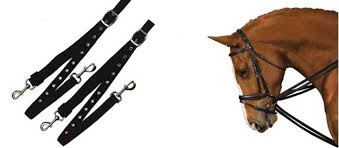
side-reins-3


HOW DOES IT WORK

There are different types of side reins but the most common have an elastic insert. They buckle around the girthstrap / onto the appropriate height surgingle ring, and clip onto the bit. They can be fitted higher or lower depending on the frame that the rider is hoping to achieve.


WHAT HORSE WOULD BENEFIT FROM IT

A horse that is fidgety or snatchy in the contact. They can pull against the contact but there will only be resistance until they give in to the pressure. It also encourages them so be still and confident in the contact as it is not erratic and stays steady.


WHAT HORSE SHOULD IT NOT BE USED ON

A horse that hangs on the contact would be better suited to something more mobile, like the Pessoa rein (see next month of Equilife) as a side-rein will just encourage this. Also unsuitable would be a very physically immature horse lacking in topline – they need more substance before they can sustain a frame, and as the side-rein is primarily to improve connection they would benefit more from something that encourages a greener “long and low frame”, such as the Halsverlenger (or neck elastic).


HOW TO FIT IT

Many people who do not like side reins have fitted them too tightly to begin with and the horse has panicked. They should be fitted slightly loosely to begin with that the horse may just get a hint of the contact on the other side, and gradually shortened until the poll is the highest point and the face is on the vertical. A side rein that is also too loose will have no benefit.


HOW TO USE IT

(pictures) Ideally the horse should be lunged off of a lunge cavesson, that the horse is purely getting a rein aid from the unemotional and consistent side rein, which will encourage the correct feeling. Remember that just as with riding, the side reins should be completely disconnected intermittently to allow the horse to stretch it’s neck and have a “free walk” to relax before being reconnected. Also remember as with any true connection, it is essential that the horse is active and forward in the work that the energy comes through from behind and ends solidly but lightly in the hand. If the horse is hiding behind the vertical and creates a slack in the side rein, this is an indication that they need to be pushed forward more positively.


WHAT TO BE CAUTIOUS OF

Do not apply the side reins too tight to begin with or the horse may panic and rear up on feeling so restrained; horses are claustrophobic by nature and this is their instictive reaction. Also beware letting the horse lean on the side rein, thus becoming dead in the contact. Do not lead horses out of the stable with the side rein on; let them walk freely to the arena and then put them on, so that if they do brace against it you can encourage them forward and into the contact.

Join the group – Becoming a DSA member ~ Brigitte Billings

If you’ve spent time schooling your horse and are enjoying partnership it’s likely that you’ve considered testing your skills in the competition arena. There are several paths you can take to make your dream a reality. Some show holding bodies run unaffiliated training shows which are open to any rider wishing to experience the show circuit without committing to a membership. However, once you’ve had a taste of the excitement you’ll certainly want to join South Africa’s thriving dressage community.

dsa-logo-play2

Membership options

The first step along this path is to join a dressage-affiliated club in your area. There are many of these and membership costs range from just a couple of hundred rand a year, to a couple of thousand, depending on the facilities available. For a list of clubs visit dressagesa.com .

As a club member you’re then able to join Dressage South Africa (DSA), the association that runs the discipline in South Africa. DSA offers various membership options for riders, from newcomers to more advanced competitors. Recreational Membership is free for you and your horse and allows you to compete at graded shows from Prelim and beyond. Although points aren’t recorded with this option, it’s a good way to get a feel for the environment and get to know the DSA team, who are available to help you through the process.

Once you move into Novice, you can upgrade to an Adult Entry Level membership. This costs R550 per year with an additional R100 horse registration fee and allows you to compete in the Prelim and Novice classes and maintains a history of your show career (although points are not recorded).

From Elementary you’ll want a Full Membership, which costs between R550 and R1000 depending on the province you ride in. Since it’s necessary to accumulate points to progress beyond Novice, if you’re planning to compete at the higher levels this option will be essential since it is at this stage that your points are recorded on the system. Bear in mind that there’s nothing stopping you from diving straight in and starting out with a Full Membership.

At each show you successfully compete in, you will be awarded points depending on your score, so the more you take part, the more quickly you’ll progress. The welfare of the horse remains paramount, so there’s no galloping through the grades allowed, however as your knowledge and experience grow, you’ll find yourself focusing more on precision and quality and less on ribbons.

Climbing the ranks

In order to progress, a horse/rider partnership must attain a minimum of 10 and maximum of 100 points in each grade.

The dressage grades are as follows:

Prelim

Novice

Elementary

Elementary-Medium

Medium

Advanced

International level / FEI Classes

Small Tour

Medium Tour

Big Tour


In upcoming features, DSA will look at the various tests, their requirements and the rules that apply to dressage in South Africa plus the added excitement that is riding to music, the ever-popular Freestyle.


Want to try it out? Recreational membership is free! Visit www.dressagesa.com for contact information.