Archive / Blogs

RSS feed for this section

My First Horse – Robyn Louw

My first contribution to Equilife was going to be super sassy, staggeringly well-researched, fantastically funny and just a little quirky. And then, as the Facebook meme goes, “THIS happened….”.

Charlotte, Anky, Carl – if you guys are reading this – exhale. Not because of the horse (obviously), but because of the rider, who is still trying to get to grips with the fabulousness that it is my privilege to partner.


If you were ever lucky enough to be of the generations that had mercury in your thermometers, you will know the predatory fascination of holding quicksilver in your hands. It is there, it isn’t, it’s fascination, it is out of your frame of reference, it’s desirable, it’s wholly uncontrollable, and wholly out of your reach. I think this is what having children must feel like (if not, I apologise – it has not been my privilege).

The closest I’ve got – for a variety of reasons – is breeding my own horses. With 6 foals to my credit, I now consider myself something of a veteran. But, as with so many things in life, there’s nothing quite like your first.

I suspect if one knew the inherent dangers – physical and emotional – of most things in life, it’s likely that we’d give them, a stealthy wide berth, instead of running headlong at them, laughing in the face of danger. I have found one’s early to mid 30’s about the best period for this – when you have too much in the way of means and too little in the way of common sense to help you know better.

This may not be everyone’s journey, but so it was for me with breeding my first horse. My first horse. The words still send little theatrical chills down my spine. I’d had horses before of course, but I wanted more than just buying one off an advertisement or inheriting a track hand-me-down with a free bucket of issues to sort out. I wanted to make it myself (and yes, I realise what a total twit I sound) and as a vague afterthought I made going to our first show together my ultimate goal.

I started out with a picture in my head of the final product and worked my way back from there. As it turns out, this is a pretty useful strategy for many things. Unfortunately it can rarely be applied to genetics. At least, not the first time round! So, the picture in my head was of a bright bay colt with black points and a star. That was my order to the universe. My heart horse, perfect in every way, if you please. I helped myself a little by starting with a bay mare. And then I read and researched and gathered as much information as I could on bloodlines and temperaments and conformation. I rang people up and asked for advice, I looked up previous generations and inspected existing progeny. Finally, after hours of agonizing, my prized (chestnut – cue alarm bells) selection was made, allowing for more hours of day dreaming of how all his best characteristics would transfer into my colt.

Send mare to stallion, mare conceives, bake at body temperature for 11 months and voila, right? Not quite, but we did finally get my mare successfully in foal. Then, almost as an afterthought, I was recommended Phyllis Lose’s Blessed Are The Broodmares. If you are considering breeding your mare, may I advise against reading it. It WILL give you sleepless nights about losing your mare, losing your foal and quite possibly losing your mind. If you have bred your mare, may I still advise against it as it will make you realise just how close you are sailing to the wind.

When the time came, being a responsible owner (and having had the bejeezus frightened out of me by Phyllis), I chose to send my mare to a maternity farm to receive expert care. We saw her just a few hours before the birth, and chatted to the farm manager about the mare, the pregnancy and what I was hoping for. “Bay colt”, I reiterated firmly. As is their habit, my mare waited for us to be safely an hour away having dinner before producing her prize. By the time we made it back, in the drizzle of a September KZN Midlands night, there was a little wet bundle on the ground. The universe had got my order muddled and delivered a chestnut. Filly. And about as rough and angular and far removed from my heart horse as it was possible to get. But as they say, you may not get the horse you want, but you do get the horse you need. And as she stood up and wobbled around in the drizzle, that funny little long-eared red bundle slipped right into a hole in my heart I didn’t even know I had.

People talk about bonding with their horse. It wasn’t something I thought about when I set out to do this. I just wanted a horse that was mine. A totally new, untouched little being that I could well, be with from the start. I wanted all of it. Every high, low, snot nose, awkward phase, growth spurt, winter coat, you name it. What I didn’t realise is that when you choose to link your life so closely to a horse, you also become theirs. In a way that I couldn’t even begin to process at the time, in that moment we made a connection. That funny, long-eared, chestnut filly (of all things), was *my* horse. And I was hers.

And so started our adventures. From the ground, to the saddle and beyond. We have moved homes and yards, we have lost friends and family and gained new ones along the way. It hasn’t all been a bed of roses. In fact, as one might expect with a large, wilful chestnut mare, and a small, equally wilful and not altogether fully prepared owner, probably very little of it has. We haven’t always liked each other. She’s put me in hospital and frightened the living daylights out of me and made me scream and cry and swear a lot more than I’d like to admit. But all along, no matter how revolting things got, we were still connected.

We did go to that first show together. She was revolting and tried to buck me off and flatten a judge. C’est la vie. She still has long ears and rough angles and thoroughly inelegant everything, but in that weird breakable / unbreakable way that quicksilver has, although we splinter apart from time to time, we are inexorably pulled back together again. We are always there for each other.

While there are still days that she makes me want to tear my hair out – and I have no doubt she feels the same – Oh my, on the days that she doesn’t….

We recently had one (hence this column – ta-daaa). Having moved on from my naïve, energetic 30’s, I’m now, well, a little more blessed in the numerical department and from that lofty height, being flung off a 16hh wall of chestnut gets less appealing the further one climbs the ladder.

Time in the saddle is supposed to be sacred, a meditation between you and your horse, free from all the detritus of mundane, a to b, one foot in front of the other of life. Unfortunately it doesn’t work that way and life frequently follows you into the tack room, onto the mounting block and right into the saddle, getting between you and your partner. Somehow all the things that you used to arrange neatly around your riding time, won’t fit so neatly in their allocated spaces anymore. They threaten to reach up and choke you if you don’t keep feeding them and time at the stables is reduced to ‘once this is finished’, ‘just another half an hour,’ ‘oh well, maybe tomorrow.’ If you’re not careful, it’s enough to fling you right off your horse.

So there I was last Saturday. I hadn’t put any work in during the week and knew I didn’t have any right to lower my sorry behind into the saddle and demand a good ride. And yet, when I did, there was my friend. Waiting patiently to see what we were going to do today and doing her best to make her huge chestnut self as small and smooth and soft as she could be. I guess it just hit home that my funny little awkward bundle was all grown up in so many ways and that when it matters most, my horse, *MY* horse, really does carry me.
 

~An accomplished all-round horsewoman, breeder, racehorse owner, & the Sporting Post’s ‘Louw Flyer’, ‘Robyn Louw’ robyn@racingmuseum.co.za


A Great Start ~ Ashleigh Hughes (Love Racing)

“One must always endeavour to keep your mount as calm and composed as possible, while in the starting stalls, because this is where your race is won, or lost!”, ~ says former five-times South African Champion Jockey Mark Khan.

And a low draw and a clean, quick getaway from the gates are essential for the jockey to position a horse in a race, in order to ride the best tactical race possible. Around the world the starting stalls have various names, like “starting barriers” in Australia and New Zealand, and “starting gates” in the USA. Here in South Africa, we refer to them as the “starting stalls” or “starting pens”, and they were introduced into common use in the early 1960’s. Before that, the jockeys had to line the horses up behind “the tapes”, which were spring-lifted mechanically, by the official Starter.

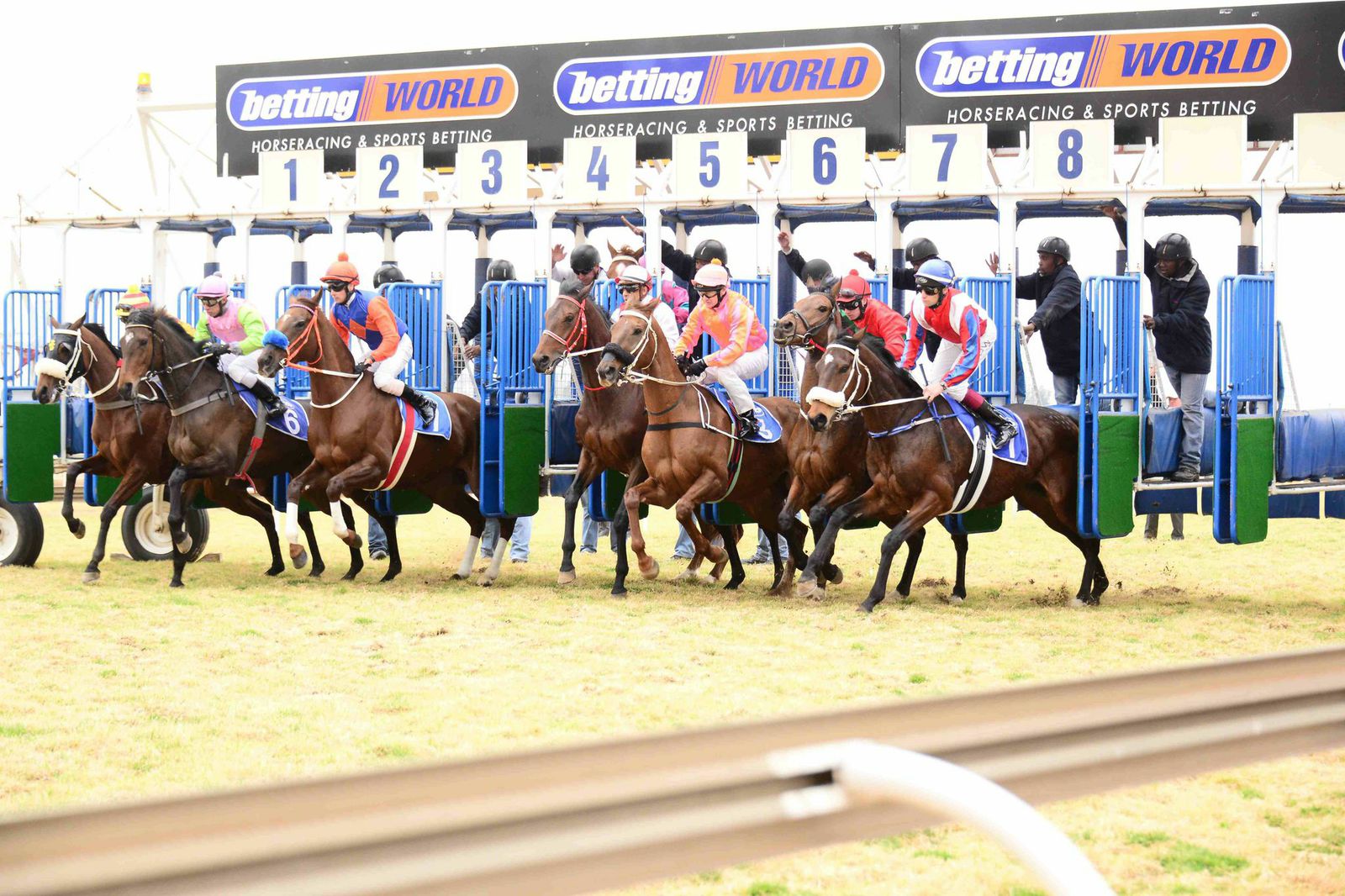
Today there is still an official “Starter”, who is licensed, and employed, by the National Horseracing Authority of South Africa. It is his duty to make sure that the horses are all loaded timeously and within the rules, and to get all the horses off to a fair start in a race. Once he “presses the button”, all the totalisator outlets are automatically closed off to betting on that particular race, in order to keep things fair, from a gambling perspective. Each stall has a set of two gates in front, which are held together by an electromagnetic solenoid. Pressing the button interrupts the power holding those magnets, and the gates spring open allowing the horses to jump out the stalls

1514~(With thanks to JC Photographics for the picture)


The official Starter has a whole team of assistants down at the start of a race. The Assistant Starter will make sure that each horse is loaded into the correct stall, and which order that they must be loaded. Generally, the more nervous horses are loaded towards the end, so that they spend less time in the stalls, which could impact on their performance in the race. There are also “Handlers” at the start – a bunch of really gutsy chaps, whose job it is to actually insert the horses into their respective stalls, and jump up to hold a horse’s head and soothe him, should it be necessary. It’s a tense, adrenaline-filled 1 to 2 minutes, as the nerves of both the horses and jockeys are heightened, as they anticipate the race ahead! In spite of this, there are relatively few dangerous incidents at the start in more than 3800 races run in South Africa each year. All the surfaces are padded extensively, to reduce the possibility of injury to jockeys, horses and handlers.

There is no staggered start in a horse race, which means that the inside draws are mostly favoured. With horses drawn on the far outside, the tactics would be to go a little faster than the other horses, and get to the front so that they can dictate the pace to their own needs, and try to win from the front. Others may prefer to “drop out” to the back of the field, and run on at the end of the race, to challenge the leaders in the finish. Whatever happens, it is far from ideal to be “trapped wide” around the turn, so the speed at which the horses jumps out of the stalls is really important in making tactical decisions in a race.

Part of the official Starter’s duties are also to ensure that all racehorses have been certified as “tractable” in the starting stalls before they race. A database is maintained by the NHA, with all the Starting Stall certificates of all active racehorses, so that the Starter can check that all runners at a race meeting have a valid Starting Stalls Certificate.

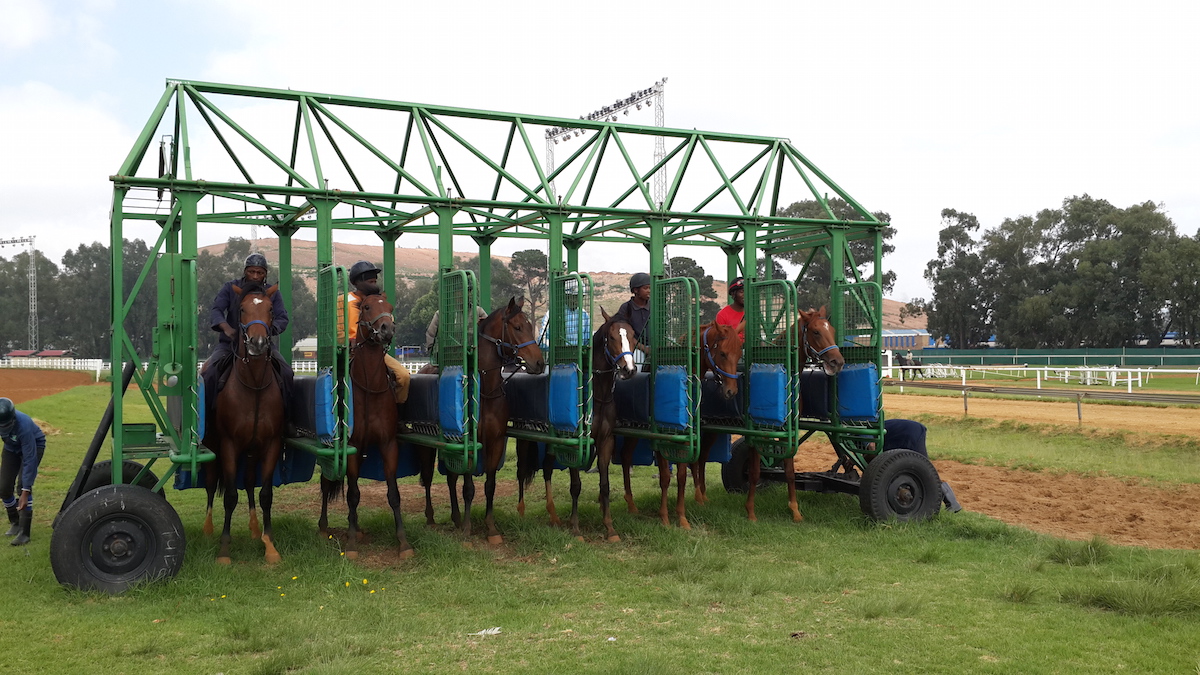
Young Horses being schooled

Most young horses start their schooling at the pens between 24 and 30 months. It’s a fairly slow process, with lots of repeat visits, positive reinforcement and good experiences. In the beginning the horses are just walked through the pens, with both the front and back gates staying open, and often with no rider on their back. Handfuls of lush, green grass are a welcome reward for these young horses, which enjoy the new challenge and change in their normal routines. Repetition of these relaxed schooling sessions is essential to build their confidence, and this process can take from 3 to 6 weeks depending on the horse. All South African racehorses must acquire a Starting Stall Certificate before they are allowed to race for the first time. These certificates are valid for 60 days, and if the horse has not raced in that time, then the horse must be repassed to be recertified. Once racing, however, that certificate remains valid in perpetuity, unless the horse misbehaves on a race day, and is declared “intractable”, whereupon they must be repassed again, and proven tractable. The reason for this is because there are a number of race meetings which are simulcast worldwide, and even a small delay can cause problems with bets being placed on the race in question.

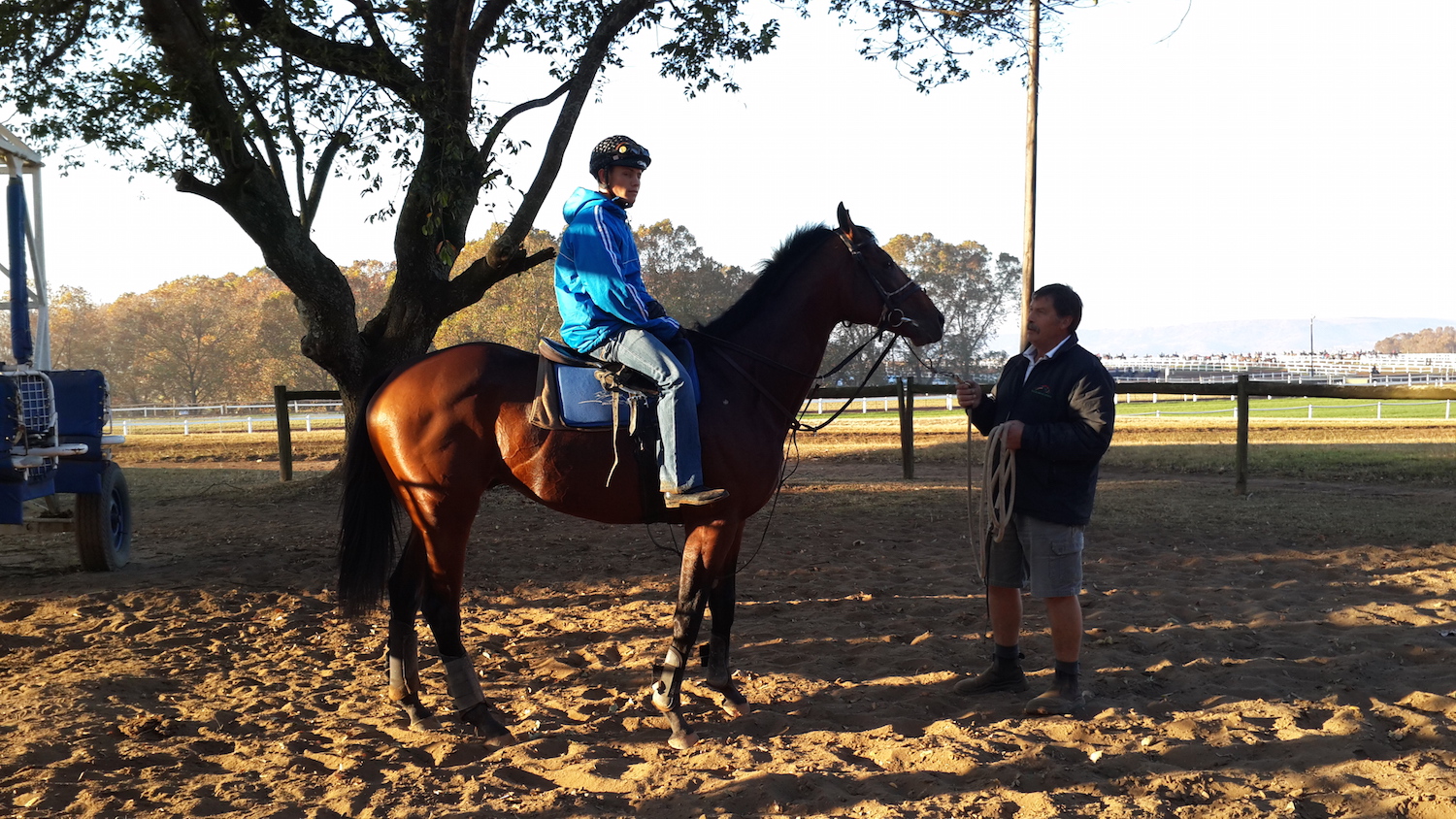
A few young horses do have an aversion to the pens – gentle coercion, and subsequent reward is generally enough to encourage them into the pens. Occasionally there are a few horses that are quite terrified of the entire process. There are various options to help these horses overcome their fears. Nobody in South Africa has quite mastered these techniques as well as Malan du Toit, dubbed the “South African Horse whisperer”. He has worked with some of the best horses in the country, including South African Horse Of The Year 2014-2015, Legislate, and 2016 South African Triple Crown winner, Abashiri. Malan travels all over the country, and is always present when his “special horses” are running. He uses a pressure halter to gain their confidence, and then his main objective is to completely desensitise the horse to the entire situation. These horses are allowed to race with the pressure halter still in place under their bridles, as there is not enough time to remove them before the gates are opened. A trainer wants his horses to be relaxed, but alert in the pens on race days, not distracted by fear and adrenaline. Sometimes larger horses develop a fear of the sides of the stalls touching them as they go in – Monty Roberts developed a specially padded “blanket”, which is draped over the horse’s hindquarters, so reduce the contact the horse has with the stalls, while inside them. The blanket is clipped onto the back gate of the stalls, and the horse will literally jump out of the blanket as he makes his start, leaving the blanket safely behind. Sometimes a blindfold also helps reduce the fear of going into the stalls, and this will also be held by a handler, and removed as the Starter opens the gates. Because it is an exceptionally high pressure situation, any special actions needed to aid the horse go into the stalls, or to stand still inside, need to be simple and quick, so as not to stress the horse any further. The Starter and his team are also aware that horses are individuals, and they are very accommodating with horses with special needs.

Malan du Toit Schooling Legislate~ Malan Du Toit schooling legislate through the pens

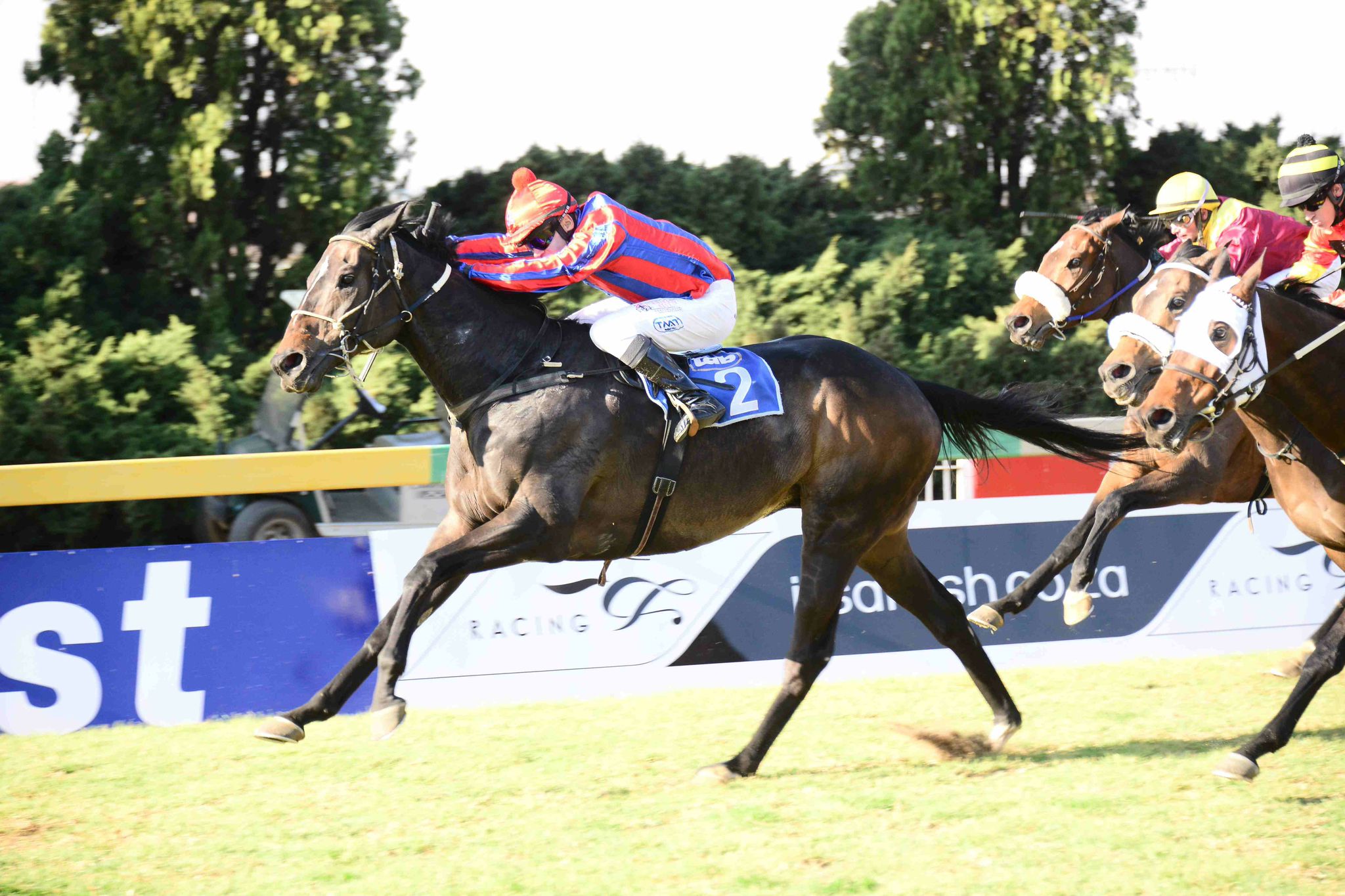
Occasionally an older horse gets a fright, or has a bad experience in a race, which results in the horse refusing to load, or thrashing out dangerously within the confines of the stalls, resulting in their Staring Stall Certificate will be withdrawn by the official Starter. The trainer is then required to reschool that horse, and present him back to the Starter, on the racecourse on a race day, to prove that he will be compliant and tractable if he races again. In 2014, a very talented Jallad gelding, called Meissa, had his Starting Stall Certificate withdrawn after he refused to load for a Grade 2 feature race at Turffontein Racecourse. He had raced more than 10 times before that, winning 3 of those races, and the reasons for his sudden dislike of the starting stalls are still unknown. Trainer Gary Alexander took his time to reschool him, over the following 2 months, and he was so calm and confident in the stalls upon his return, that he was loaded first of all, in every subsequent race. He raced with the “Be Nice” pressure halter on after that, and still won another 3 races, having completely overcome his fear of the starting stalls. So, with patient schooling, anything is possible!

Meissa racing with a Be Nice pressure halter~ Meissa racing with the “Be Nice” pressure halter (With thanks to JC Photographics for the picture)